The AI engineering team your firm hasn’t hired.
Your firm has engineering capacity and no software team. We’re civil engineers who write software, and we work embedded in your projects: AI that runs on confidential data, the systems you already own finally talking, and the internal tools you keep putting off.
AI on confidential data · Tools that don’t exist · Oversight
Custom Build · AE Firm Deployment
Report Automation Suite
Private deployment · Built by VibeOps
0
Complete
847hrs
Saved
23
Reports
98%
QA Pass
Active Projects
Custom Build · AE Firm Deployment
Report Automation Suite
Private deployment · Built by VibeOps
0
Complete
847hrs
Saved
23
Reports
98%
QA Pass
Active Projects
Custom Build · AE Firm Deployment
Report Automation Suite
Private deployment · Built by VibeOps
0
Complete
847hrs
Saved
23
Reports
98%
QA Pass
Active Projects



Projects / Bridge_Inspections / Queensborough_2024
Queensborough_Report_Draft.docx
Queensborough_Report_Draft_v2.docx
Queensborough_Report_JA_edits.docx
Queensborough_Report_FINAL.docx
Queensborough_Report_FINAL_v2.docx
Queensborough_Report_FINAL_client.docx
Queensborough_Report_FINAL_FINAL.docx
Queensborough_Report_FINAL_FINAL_rev.docx
8 versions. 1 report. 7 weeks.
Every. Single. Project.
The Problem
Every firm has a list of fixes nobody has time to build.
This folder is one version of it, and every engineer recognises it. Yours might be the systems that don’t talk to each other, the spreadsheet one person maintains, or twenty years of past projects nobody can search.
The fixes are obvious. Nobody builds them, because a firm full of engineers has no reason to also employ software engineers. That’s the job we take.
The gap
The largest firms built AI teams. You got an AI committee.
Firms of 10,000 and up have digital centres of excellence and internal software teams. Firms under fifty have neither the budget nor the need. Almost everyone else sits in between: enough scale to have the problem, nowhere near enough to justify hiring software engineers into an engineering practice.
So those firms appoint someone. An AI champion, an innovation lead, a committee. Capable people handed a mandate and no engineering capacity to deliver it. We fill that gap with software that ships, not advice.
10,000+ staff
Has an internal AI team
“By the time the internal team delivers the tool, the moment for it has passed.”
Engineer, multinational AE firm
75–750 staff
Has a mandate and no team
“They were weighing whether to spend capital building internally. So far the internal attempt had failed.”
Coordinator, national construction group
Under 50 staff
Not yet the problem
“Everything still runs on paper and spreadsheets.”
President, regional engineering firm
Drawn from documented conversations with 100+ AE and construction professionals.
Which of these is you?
Six problems we hear
in almost every firm.
You don’t need an opinion about AI to recognise these. Pick the one that sounds like your week.
Something we already built
Every code that applies, tied to the address.
North American projects sit under federal, state or provincial and municipal codes at once, and working out which apply is a tax every project pays. So we built the lookup. Enter a project address, get the applicable code stack and the referenced standards, with every citation traceable to source.
This one is ours, and it is the point of working the way we do. Every engagement leaves us with something we can carry into the next one, so the firm after you isn’t paying us to learn civil engineering from scratch.
Federal, state/provincial and municipal layers resolved together
Municipal bylaws and site-specific overlays surfaced for you
Referenced standards pulled in alongside the codes that invoke them
Every citation traceable to source, so a reviewer checks it instead of trusting it
Deployed inside the environment your security team approved
Project Address
Resolving jurisdiction stack…
How we work
We embed with your team and scope it in writing first.
Our engineers work inside your projects, on your real files, next to the people who do the work. It’s the only way to learn a workflow well enough to build for it. Discovery writes that down as a technical plan, a data governance and security plan and a prioritised backlog, and you approve all of it before anyone starts building. Where the work depends on AI doing something specific, we prove it on your own documents first.
01
Discovery
We sit with your team, learn the workflow and write it down. You approve it.
02
Proof gate
We prove the hard part on your real documents before you fund the build.
03
Build
Fixed scope, fixed fee, defined acceptance tests.
04
Pilot
Your team runs it on live work through structured revisions.
05
You own it
Codebase, workflows and documentation transfer to you.
For whoever has to approve this
Your IT department is right to block the public tools.
Project material is client property under confidentiality terms. Most firms told us the blocker was never the technology, it was the approval. So we design for that review from the first week: deployment inside your boundary, no training on your data, and a written governance plan your team signs off before we build.
Deployed in your tenancy, your infrastructure, or a dedicated environment
Your data is never used to train models or pooled across clients
Data residency treated as a hard requirement, not a preference
Governance and security plan approved in writing before development
Audit trail of what was generated, from what source, reviewed by whom
Built by engineers, for engineers
Civil engineers who can also ship the software.
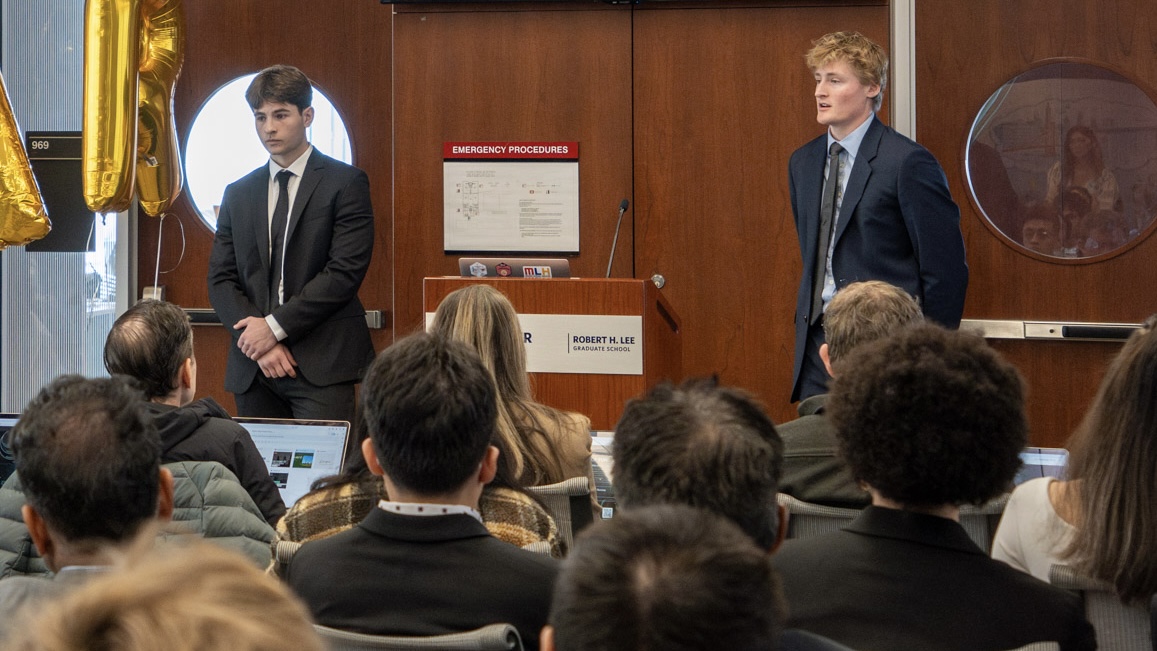
VibeOps Technologies Inc. - Vancouver, BC
Built on documented conversations with 100+ AE professionals across North America.


Your firm has an AI mandate.
It doesn’t have AI engineers.
That’s the whole of what we do.
Ready when you are
Become a firm that builds its own tools.
You already have the engineering capacity. What you don’t have is a software team built around it. That’s our half of the work.